How to Talk About Products So People Actually Buy
Selling is mostly specificity and honesty. A repeatable way to describe products that builds trust and moves shoppers to buy.
By The Influencer Butler Team · July 13, 2026 · 9 min read
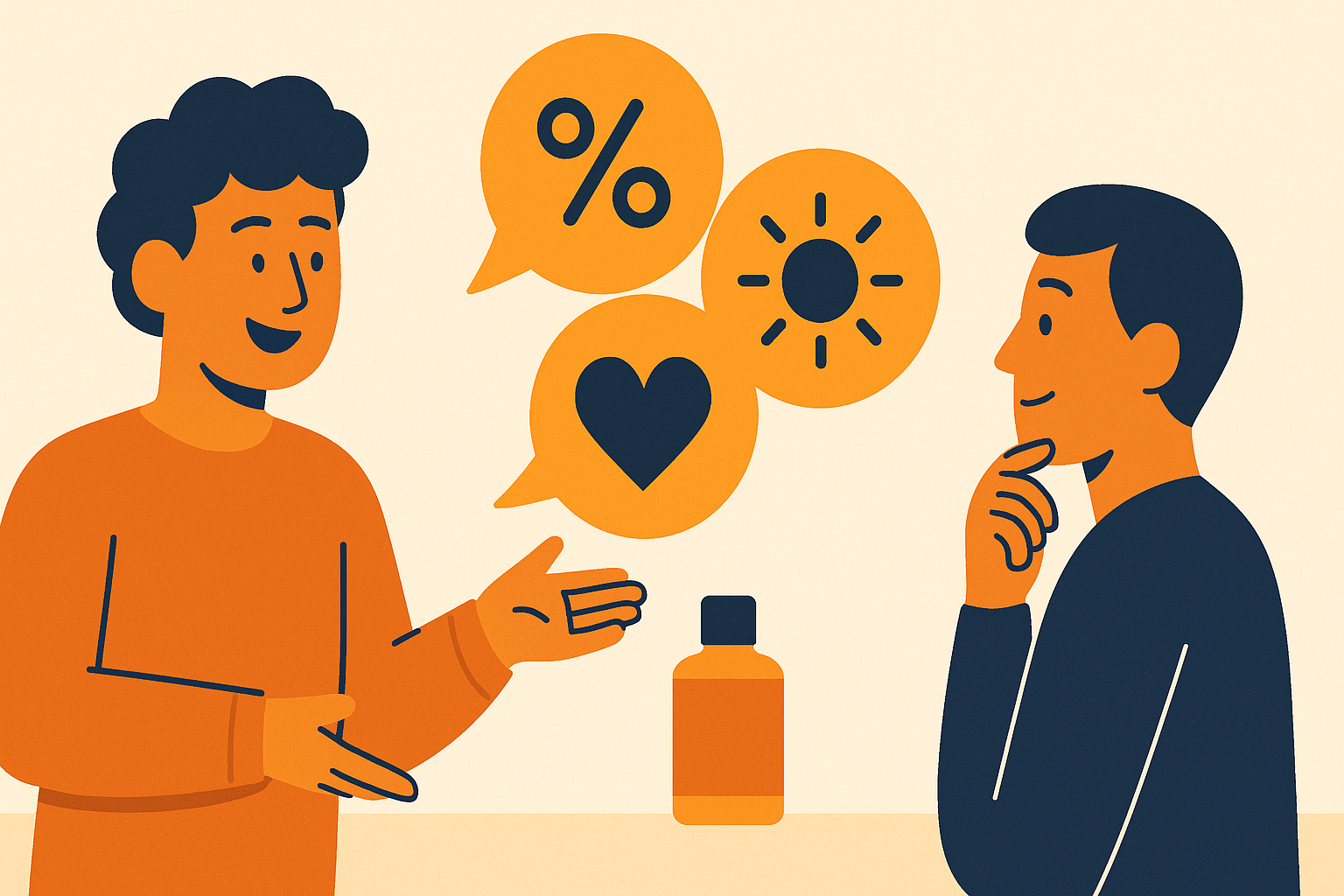
If you want to learn how to describe products so people actually buy, here is the surprising part: it has almost nothing to do with being a smooth talker. The creators who move the most product are rarely the most polished. They are the most specific and the most honest. Vague enthusiasm ("you guys, this is amazing, I'm obsessed") slides right off your audience because they have heard it a thousand times and it tells them nothing. Concrete detail and genuine honesty, on the other hand, build the kind of trust that ends in a purchase.
Think about how you actually decide to buy something a friend recommends. It is never because they yelled "it's so good." It is because they said something specific and true: "this travel mug kept my coffee hot through a three-hour drive and it has never once leaked in my bag." That sentence does more selling than ten enthusiastic adjectives, because it is real, it is specific, and it answers a question you actually had.
This post is a repeatable way to talk about any product so that your audience trusts you and buys.
Why specificity beats hype every time
Hype is cheap and everyone uses it, so it has stopped meaning anything. When you say a product is "amazing," your audience's brain files it next to every other ad they have ever ignored. Specificity is rare and credible, so it cuts through.
Specific details do three things at once:
- They prove you actually used the product, which is the foundation of trust.
- They answer the unspoken questions a shopper has before buying.
- They help the right person see themselves using it ("a three-hour drive" tells the commuter this is for them).
"It's great" is a claim. "It survived my toddler throwing it down the stairs twice" is evidence. Audiences buy evidence, not claims.
The shift is simple to state and harder to practice: replace every adjective with a moment. Instead of "durable," show the moment it survived. Instead of "comfortable," describe the eight-hour day you wore it. The moment carries the adjective inside it, and it is far more convincing.
A simple framework for describing any product
You do not need to reinvent your pitch each time. A loose template keeps you specific and stops you from defaulting to hype.
1. Lead with the specific problem it solves
Start with the friction the product removes, in concrete terms. Not "this makes life easier" but "I used to spend twenty minutes untangling cords every morning until this." The problem is what makes a stranger lean in, because they recognize it.
2. Show the proof you actually used it
This is the trust anchor. Mention a real detail only a user would know: how it held up, a small flaw you noticed, how long you have had it. Counterintuitively, naming a minor downside makes everything else you say more believable.
3. Help them picture themselves with it
Connect it to a moment in their life. "If you travel for work, this is the one." "If your kitchen counter is always cluttered, this clears it." You are helping the right buyer recognize themselves.
4. Make the next step obvious
Tell them exactly where to get it and that you have linked it. No clever call to action needed, just a clear, low-pressure path. People who are convinced still need to be told what to do next.
The honesty rule that makes the rest work
Everything above collapses if you are not honest. The single fastest way to destroy the trust that drives sales is to oversell something that disappoints. Your audience buys once on your word; they buy for years on your track record.
So the rule is simple: only recommend what you would genuinely tell a friend to buy, and mention the flaws. A creator who occasionally says "this one is not worth it" becomes infinitely more trusted when they do say "buy this." Honesty is not the opposite of selling. It is what makes your selling believable.
This is also why featuring products you actually know matters so much. It is much easier to be specific and honest about something you have really used and that your audience has really responded to. Our guide on choosing products that convert gets into picking items that fit both you and your buyers.
Match your words to what your audience already buys
Here is a layer most creators miss. The most persuasive product talk in the world still falls flat if you are describing the wrong product for your audience. Specificity and honesty get a fitting product over the line; they cannot rescue a mismatch.
So the best describers are not just good with words. They are good at knowing which products their audience actually wants to hear about. And the cleanest source of that knowledge is your own sales history. The products your followers have already bought from you are the ones where your specific, honest description will land hardest, because the demand is already there.
This is where having your real order data in front of you changes the game. Instead of guessing which product to lovingly describe, you feature the ones your audience has voted for with their wallets. For the bigger picture on how to read that data, how much Amazon influencers make puts the earning side in context.
Where a command center supports the storytelling
The talking is yours. No software writes a genuine, specific recommendation, and it should not try. But knowing which products deserve your best storytelling is something you can stop guessing about.
That is part of what we built Influencer Butler for. Orders Butler syncs your real Amazon order history so you can see which products your audience actually buys, and Storefront Butler keeps your catalog organized so you always know what you are working with. The describing stays human. The tool just makes sure you are pointing your best words at the products most likely to convert, instead of pouring effort into items nobody was going to buy anyway.
The takeaway
People buy from creators they trust, and trust comes from specificity and honesty, not hype. Replace adjectives with moments, lead with the real problem the product solves, prove you used it, name the occasional flaw, and point your best descriptions at the products your audience already buys. Talk about products like you would to a friend you respect, and the selling takes care of itself.
Want to aim your best storytelling at the products that actually sell? Start your free 14-day trial of Influencer Butler and see what your audience is really buying.
Share this post
Tools and guides for this topic
Put this into practice with the tools and walkthroughs that match what you just read.
- Free courseFree Amazon Influencer courseA free step-by-step course from first storefront to first commissions.
- Free toolAll free creator toolsCalculators and generators for Amazon and social creators, no signup.
- Free extensionFree Chrome extensionMoney signals on the Amazon pages you already browse, free.
Let a butler handle the busywork.
Influencer Butler automates the repetitive parts of running your creator business, from accepting Creator Connections campaigns to catching price drops and keeping your outreach moving. Try it free for 14 days.
Start your free trial