How to Use Instagram Reels for Affiliate Marketing
Reels are reach. How to make Reels that introduce products naturally and send viewers to your affiliate links.
By The Influencer Butler Team · August 18, 2026 · 7 min read
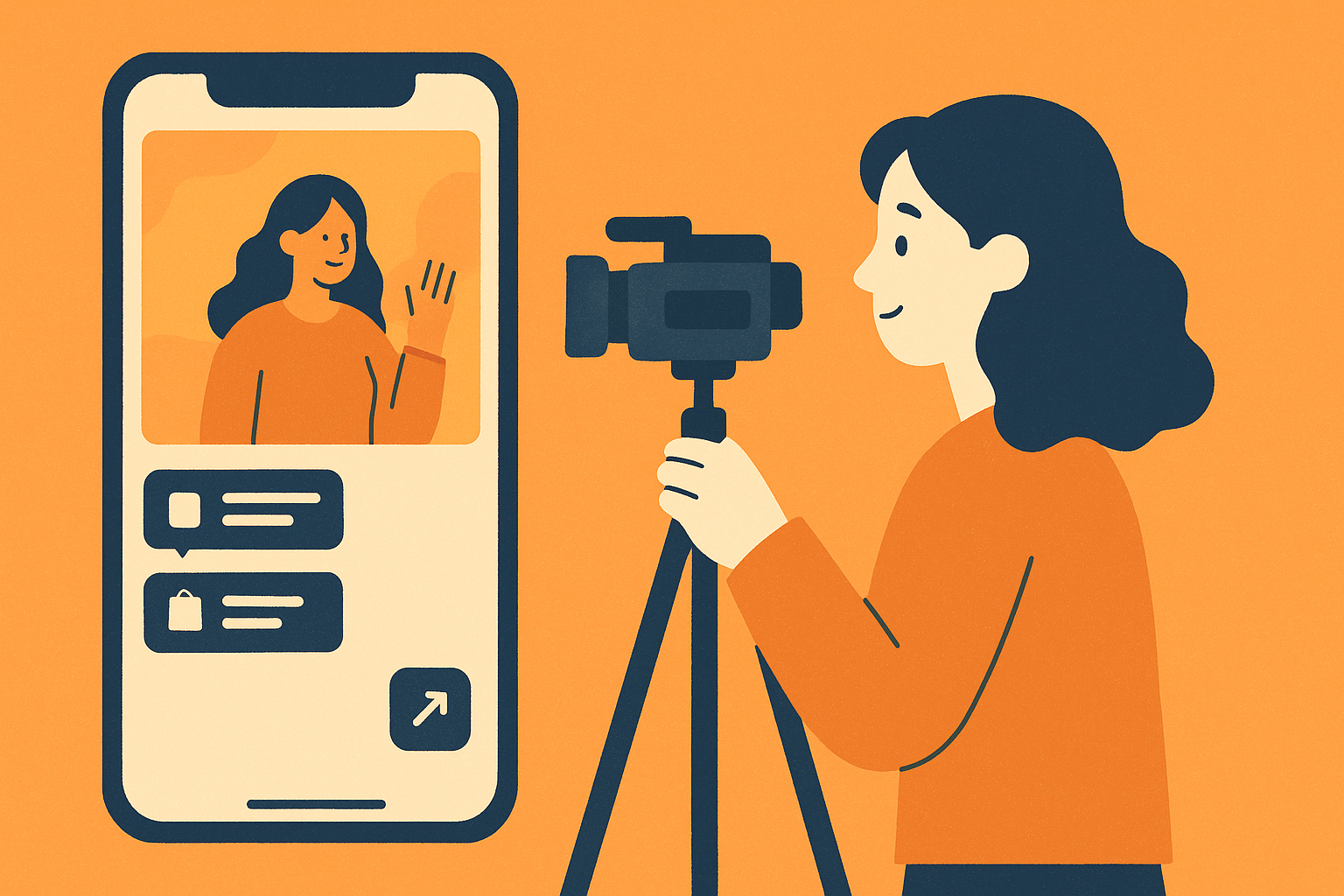
If you want new people to find your affiliate content, Instagram Reels are still the most generous thing Instagram hands you for free. A good Reel can reach thousands of people who have never heard of you, and a sliver of them will tap your link and buy. That is the whole pitch for using Instagram Reels for affiliate marketing: reach you do not have to pay for, pointed at products you actually earn on. The tricky part is doing it without sounding like a walking infomercial, because the moment a Reel feels like an ad, the algorithm and your audience both lose interest at the same time.
So let's talk about how to make Reels that quietly sell, where to put the link so people actually find it, and how to keep the whole thing from eating your entire week.
Why Reels work for affiliates (when you do them right)
Reels get pushed to non-followers far more aggressively than feed posts or Stories. That means a single Reel about a product can keep finding new buyers for days, sometimes weeks, long after you hit post. Compare that to a Story, which vanishes in 24 hours. The Reel is your top-of-funnel: it brings strangers in. Your Stories and link in bio are where the actual buying happens.
The catch is that Reels do not let you drop a clickable link inside the video. So your job in a Reel is not to close the sale. It is to make someone curious enough to go looking for the link, which lives in your bio or in your Stories.
That single reframe fixes most beginner mistakes. You are not writing a sales pitch. You are writing a reason to find out more.
Make the product the payoff, not the premise
The Reels that flop usually open with the product. "Hey guys, today I'm reviewing this blender." Nobody who isn't already shopping for a blender will stay for that.
The Reels that work open with a problem, a result, or a tiny bit of intrigue, and let the product show up as the answer.
- Lead with the problem: "My counter was a disaster until I found this." Then reveal the product.
- Lead with the result: Show the smoothie, the clean counter, the finished thing first. Then back into how you got there.
- Lead with a hook line: "Amazon stuff I actually use every single day." Now you can feature five products and every one is a link.
A few formats that reliably pull their weight:
- The "things I use" roundup. Three to five related products with a one-line reason for each. Easy to film, easy to watch, and it gives you several link options.
- The before-and-after. Especially strong for anything cleaning, organizing, or beauty related. The transformation is the hook.
- The honest mini-review. One product, what you love, one small thing you'd change. The tiny criticism is what makes you believable.
The product is the answer to a question the viewer already has. Your job is to ask that question in the first three seconds.
Tell people exactly where the link is
This sounds obvious, and almost everyone skips it. Viewers will not hunt for your link. You have to point at it, more than once, in plain language.
In the video, say it out loud or put it on screen: "Link's in my bio." In the caption, say it again. If you have a few products, tell people which one is linked and where. Vague instructions cost you clicks. "Everything's linked" is worse than "tap the link in my bio, it's the first thing on my storefront."
This is also why your bio and the page it points to matter so much. A Reel can send a thousand curious people to a cluttered link page where they can't find the thing you mentioned, and you'll earn nothing. If you want to tighten that part up, our Instagram bio guide walks through making the path from Reel to link as short as possible.
Use Stories to catch the warm traffic
Here is the move most creators miss. When a Reel starts performing, people land on your profile and look around. That is the perfect moment to have a Story up that links directly to the product from the Reel.
So the rhythm goes: post the Reel, then immediately post a Story featuring the same product with a tappable link sticker. The Reel does the reaching. The Story does the linking. Anyone who watched the Reel, got curious, and tapped your profile finds a direct path to buy without leaving the app.
This Reel-to-Story handoff is where a lot of affiliate income actually comes from, and it is worth being deliberate about. We go deeper on the Stories side in our Story selling tactics post, but the short version is: never let a hot Reel sit on a profile with no Story backing it up.
Post enough to learn what works
One Reel tells you nothing. The algorithm is moody, your hook might be off, the trend might be stale. You need volume to find your patterns. That usually means several Reels a week, which is exactly where the affiliate dream collides with reality, because filming, editing, captioning, and posting that often is a real job on top of finding products and managing links.
This is the part where a lot of people quietly burn out. They start strong, post daily for two weeks, then drift to once a month, and the reach dries up because consistency is most of the game.
That grind is a big reason we built Influencer Butler. It is a desktop command center made by Amazon influencers for Amazon influencers, and it takes the repetitive parts of running your accounts off your plate. Its Action Queue turns the dozen little daily decisions, who to reply to, what to share, what to follow up on, into a single inbox you clear in a few minutes, so the time you do spend goes into making the next Reel instead of managing the aftermath of the last one. The creating stays yours. The busywork gets handled.
Keep a simple performance habit
Once a week, look back at your Reels and notice which ones drove profile visits and link taps, not just views. Views are flattering. Taps pay. A Reel with 2,000 views and 80 link taps is worth more to you than one with 50,000 views and 12 taps. Find the hooks, products, and formats that convert, and make more of those. Drop the ones that get watched but never clicked.
Over a month, this turns a scattershot "post and pray" approach into a repeatable engine: you know which product types perform, which hooks land, and which Stories close.
The takeaway
Instagram Reels are the cheapest reach you'll find for affiliate content, but only if you treat them as the top of a funnel, not the whole thing. Hook people with a problem or a result, make the product the payoff, tell them plainly where the link is, and back every strong Reel with a Story that closes the loop. Then do it often enough to learn what works. The strategy is simple. The consistency is the hard part, and it's the part most worth protecting.
Ready to spend less time on the busywork and more on the content? Start your free 14-day trial of Influencer Butler and let it handle the daily decisions while you film.
Share this post
Tools and guides for this topic
Put this into practice with the tools and walkthroughs that match what you just read.
- Free courseFree Amazon Influencer courseA free step-by-step course from first storefront to first commissions.
- Free toolAll free creator toolsCalculators and generators for Amazon and social creators, no signup.
- Free extensionFree Chrome extensionMoney signals on the Amazon pages you already browse, free.
Let a butler handle the busywork.
Influencer Butler automates the repetitive parts of running your creator business, from accepting Creator Connections campaigns to catching price drops and keeping your outreach moving. Try it free for 14 days.
Start your free trial